

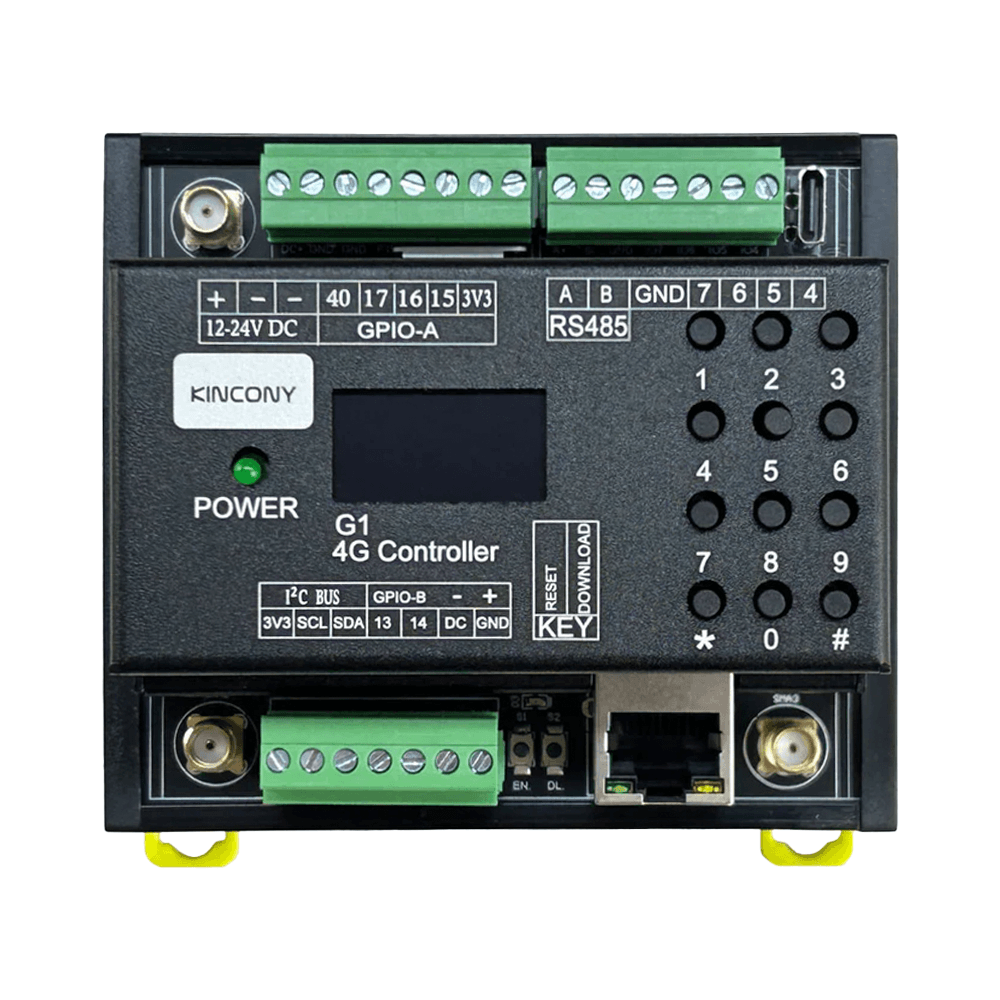


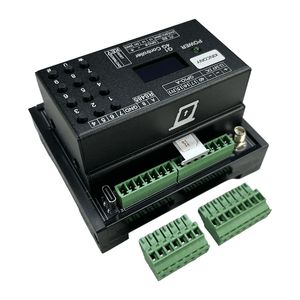
KinCony G1 Programmable 4G Module
Frequently Bought Together
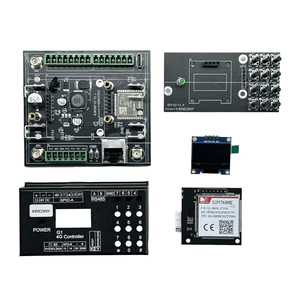
The KinCony G1 is a DIN rail IoT gateway that combines the ESP32-S3 with a SIMCOM SIM7600E 4G LTE module on a single compact board. Where most KinCony controllers treat cellular connectivity as an optional add-on, the G1 makes it the primary feature — it is designed from the ground up for projects where 4G is the main or only communication path. Think remote monitoring stations, off-grid automation panels, vehicle installations, or any site where Wi-Fi and Ethernet are unavailable or unreliable.
Beyond the 4G modem, the G1 gives you Wi-Fi, 100Mbps Ethernet, RS485, Bluetooth, and a generous collection of free GPIO pins — so it works equally well as a connected gateway feeding data to cloud platforms, as a standalone controller running local automations, or as the cellular backbone for a larger KinCony system.
Why You'll Love This Controller
✔ 4G That Actually Works With Home Assistant
KCS v3 firmware exposes SMS and voice call functions directly over MQTT. Receiving a call or text automatically updates a state topic in Home Assistant — no custom scripting, no serial parsing. It just works.
✔ GPS + 4G on One Board
Combining location tracking with cellular data in a single DIN rail module is unusual at this price point. The G1 handles both using the SIM7600E's built-in GPS receiver — no separate GPS module, no extra wiring.
✔ Designed for Off-Grid and Remote Installations
Wide 12–24V DC input, external antenna options for all three radios, and a cellular-first connectivity model make the G1 well suited for sites without fixed infrastructure — remote monitoring stations, agricultural sensors, vehicle dashboards, and similar deployments.
✔ A Communication Hub, Not Just a Controller
The G1 is the right board when the challenge is getting data in and out of a remote location, rather than switching a lot of loads. Pair it with other KinCony controllers on the same RS485 bus or MQTT network and it becomes the cellular backbone of a larger system.
✔ ESPHome Native Support
SMS alerts via ESPHome YAML configuration work out of the box — useful for projects that want sensor-triggered text notifications without custom firmware.
Among other outstanding features are the following:
- Triple-Network Connectivity: Wi-Fi, 100Mbps Ethernet (IPv4/IPv6), and 4G LTE operate independently. The G1 can use Ethernet as its primary connection, fall back to Wi-Fi, and use 4G as a last-resort cellular backup — or run entirely on 4G with no fixed network at all.
- Dedicated Antenna Extenders: Separate IPEX antenna connectors are provided for the ESP32-S3 Wi-Fi antenna, the 4G LTE antenna, and the GPS antenna. All three can be routed to external antennas for improved signal in metal enclosures or challenging RF environments.
- KCS v3 SMS and Voice Call Automation: With KCS v3 firmware, sending an SMS or making a voice call from Home Assistant is a single MQTT publish. Received calls and SMS messages automatically update MQTT state topics, making it straightforward to trigger automations from a phone call or text — no coding required.
- ESPHome 4G Support: The G1 works with ESPHome, which includes native support for sending SMS and making calls via the SIM7600E. A sensor trigger can automatically send a text to your mobile — all configured in YAML, no custom firmware needed.
- Network Status LED: An onboard LED provides a real-time visual indicator of the 4G module's network state: solid on means actively searching or on a call; fast blink means transmitting data; slow blink means registered and idle; off means powered down or in sleep mode.
Technical Specifications:
| Category | Specification |
|---|---|
| Core Processor | ESP32-S3-WROOM-1U (N16R8, dual‑core 32‑bit Xtensa LX7) |
| Digital Outputs | N/A |
| Analog Inputs | N/A |
| Digital Inputs | N/A |
| Digital I/O (GPIO) | ▪ 4× 1‑Wire GPIO (with pull‑up) ▪ 3× free GPIO (direct to ESP32, no pull‑up) ▪ 4× free GPIO (no ESD diode on PCB) |
| Wireless Connectivity | ▪ Wi‑Fi 2.4 GHz (802.11 b/g/n) ▪ Bluetooth 5.0 (BLE) ▪ 4G LTE: SIM7600E‑L1C (with Nano SIM slot, GPS antenna extender) |
| IoT Platform | Compatible with Home Assistant via ESPHome; supports Arduino IDE / MicroPython / ESP-IDF development |
| Wired Connectivity | ▪ Ethernet: 100M RJ45 (W550 chip, IPv4/IPv6) ▪ RS485 ▪ USB‑C (power/programming) ▪ I²C extender ▪ LCD connector |
| Onboard Peripherals | ▪ Antenna extenders: for ESP32-S3, 4G, GPS |
| User Interface | ▪ Buttons: 2× (Reset, Download) + 12× telephone keyboard ▪ Display: SSD1306 128×64 OLED (I²C) |
| Power Supply | 12-24 VDC |
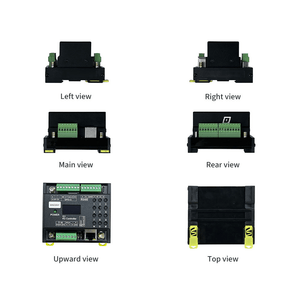
| Dimensions | 95 × 84 × 59 mm |
| Mounting | 35 mm DIN rail (EN 60715) |
I. Firmware Options and Features
| Solution | Ideal For | Key Advantages |
|---|---|---|
| 1. KCS v3 Firmware (Recommended) | Beginners / Zero-Code Users | ✔ Auto-detects Home Assistant via MQTT (no config files) ✔ Works with Tuya App + Alexa/Google Voice Control ✔ Local IFTTT automation (no internet needed) ✔ 2-year free KinCony Cloud (official store only) ✔ Apple HomeKit support (one-tap setup) |
| 2. ESPHome Firmware | Home Assistant Enthusiasts | ✔ Full open-source customization ✔ Web UI + HA deep integration ✔ Full YAML examples |
| 3. Tasmota Firmware | Open-Source Community | ✔ Massive plugin ecosystem ✔ MQTT/Web control + rule engine |
| 4. Arduino/ESP-IDF Custom Code | Developers | ✔ Full Arduino demos ✔ Supports MicroPython/ESP-IDF |
| 5. Hybrid Setup (Best Practice) | Advanced Users | Tuya App (remote via internet) + Home Assistant (local via LAN) – Security + convenience |
II. Technical Resources by Product
Direct links to pin definitions, ESPHome configurations, Arduino demo source codes, and KCS firmware. All open-source and maintained on GitHub.
| Model | KCS Firmware | Pin Definitions | ESPHome (YAML) | Arduino Demos |
|---|---|---|---|---|
|
F4
4‑ch relay · 4 inputs
ADS1115 |
📦 kcs_{KCS_VERSION}.bin | 📄 F4_pin_definition.md |
🔹 with Tuya Tuya module
🔸 without Tuya Ethernet/WiFi only
|
📁 F4/ (11 examples) |
|
F8
8‑ch relay · 8 inputs
PCF8575 |
📦 kcs_{KCS_VERSION}.bin | 📄 F8_pin_definition.md |
🔹 with Tuya Tuya module
🔸 without Tuya Ethernet/WiFi only
|
📁 F8/ (11 examples) |
|
F16
16‑ch relay · 16 inputs
PCF8575 |
📦 kcs_{KCS_VERSION}.bin | 📄 F16_pin_definition.md |
🔹 with Tuya Tuya module
🔸 without Tuya Ethernet/WiFi only
|
📁 F16/ (11 examples) |
|
F24
24‑ch relay · 24 inputs
3×PCF8575 |
📦 kcs_{KCS_VERSION}.bin | 📄 F24_pin_definition.md |
🔹 with Tuya Tuya module
🔸 without Tuya Ethernet/WiFi only
|
📁 F24/ (12 examples) |
|
F32
32‑ch relay · 32 inputs
3×PCF8575 |
📦 kcs_{KCS_VERSION}.bin | 📄 F32_pin_definition.md |
🔹 with Tuya Tuya module
🔸 without Tuya Ethernet/WiFi only
|
📁 F32/ (11 examples) |
| Model | KCS Firmware | Pin Definitions | ESPHome (YAML) | Arduino Demos |
|---|---|---|---|---|
|
T16M
16‑ch relay + 16 inputs
single I2C bus |
📦 kcs_{KCS_VERSION}.bin | 📄 T16M_pin_definition.md | 📁 T16M/ (6 examples) | |
|
T32M
32‑ch relay + 32 inputs
dual I2C bus |
📦 kcs_{KCS_VERSION}.bin | 📄 T32M_pin_definition.md | 📁 T32M/ (7 examples) | |
|
T64M
64‑ch relay + 64 inputs
dual I2C buses |
📦 kcs_{KCS_VERSION}.bin | 📄 T64M_pin_definition.md | 📁 T64M/ (8 examples) | |
|
T128M
128‑ch relay + 128 inputs
dual I2C buses |
📦 kcs_{KCS_VERSION}.bin | 📄 T128M_pin_definition.md | 📁 T128M/ (8 examples) | |
|
TA
Thermostat Adapter
|
📦 kcs_{KCS_VERSION}.bin | 📄 TA_pin_definition.md | 📁 TA/ (11 examples) |
🔸 v2 high‑precision ESPHome configs (0.001 kWh) require ARM CPU firmware ≥ V20_260305SP.
| Model | KCS Firmware | Pin Definitions | ESPHome (YAML) | Arduino Demos |
|---|---|---|---|---|
|
N10
10‑ch energy meter
|
📦 kcs_{KCS_VERSION}.bin | 📄 N10_pin_definition.md |
🔹 N10_esphome.yaml v1 (1 kWh)
🔸 N10_esphome_v2.yaml v2 (0.001 kWh)
v2 require ARM CPU firmware ≥ V20_260305SP. |
📁 N10/ (5 examples) |
|
N20
20‑ch energy meter
|
📦 kcs_{KCS_VERSION}.bin | 📄 N20_pin_definition.md |
🔹 N20_esphome.yaml v1 (1 kWh)
🔸 N20_esphome_v2.yaml v2 (0.001 kWh)
v2 require ARM CPU firmware ≥ V20_260305SP. |
📁 N20/ (5 examples) |
|
N30
30‑ch energy meter
|
📦 kcs_{KCS_VERSION}.bin | 📄 N30_pin_definition.md |
🔹 N30_esphome.yaml v1 (1 kWh)
🔸 N30_esphome_v2.yaml v2 (0.001 kWh)
v2 require ARM CPU firmware ≥ V20_260305SP. |
📁 N30/ (5 examples) |
|
N60
60‑ch energy meter
|
📦 kcs_{KCS_VERSION}.bin | 📄 N60_pin_definition.md |
🔹 N60_esphome.yaml v1 (1 kWh)
🔸 N60_esphome_v2.yaml v2 (0.001 kWh)
v2 require ARM CPU firmware ≥ V20_260305SP. |
📁 N60/ (5 examples) |
| Model | KCS Firmware | Pin Definitions | ESPHome (YAML) | Arduino Demos |
|---|---|---|---|---|
|
DM4
4‑ch digital input module
|
📦 kcs_{KCS_VERSION}.bin | 📄 DM4_pin_definition.md |
🔸 without Tuya Ethernet/WiFi only
|
📁 DM4/ (11 examples) |
|
DM8
8‑ch digital input module
|
📦 kcs_{KCS_VERSION}.bin | 📄 DM8_pin_definition.md |
🔸 without Tuya Ethernet/WiFi only
|
📁 DM8/ (11 examples) |
|
DM16
16‑ch digital input module
|
📦 kcs_{KCS_VERSION}.bin | 📄 DM16_pin_definition.md |
🔹 with Tuya Tuya module
🔸 without Tuya Ethernet/WiFi only
|
📁 DM16/ (11 examples) |
|
DM32
32‑ch digital input module
|
📦 kcs_{KCS_VERSION}.bin | 📄 DM32_pin_definition.md |
🔸 without Tuya Ethernet/WiFi only
|
📁 DM32/ (11 examples) |
| Model | KCS Firmware | Pin Definitions | ESPHome (YAML) | Arduino Demos |
|---|---|---|---|---|
|
G1
Gateway controller
|
📦 kcs_{KCS_VERSION}.bin | 📄 G1_pin_definition.md | Not supported | 📁 G1/ (11 examples) |
|
AIO Hybrid
All‑in‑one hybrid controller
RF433 · Zigbee · IR · DAC |
📦 kcs_{KCS_VERSION}.bin | 📄 AIO_Hybrid_pin_definition.md |
🔹 with Tuya Tuya module
🔸 without Tuya Ethernet/WiFi only
|
📁 AIO Hybrid/ (13 examples) |