


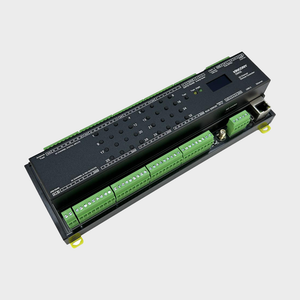
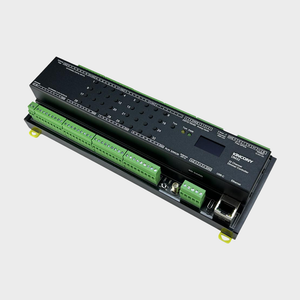
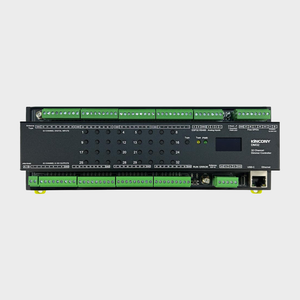
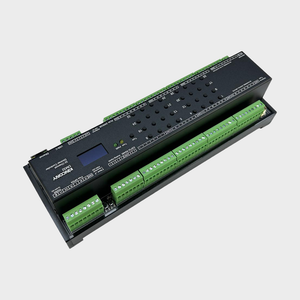
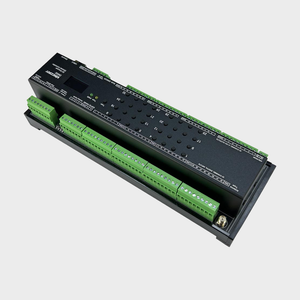
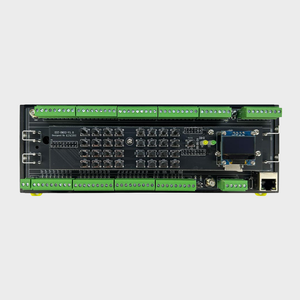
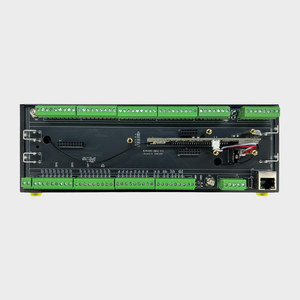
KinCony DM32 32-Channel Dimmer Controller
Frequently Bought Together
The DM32 Dimmer is the large-scale dimming controller in the DM series — delivering 32 independent 0-10V DC output channels from a single DIN rail module. It is built for commercial lighting rigs, large smart home installations, multi-zone HVAC plants, and any project where managing dozens of analog-controlled circuits from one network-connected device is the practical choice. Powered by the ESP32-S3 with dual RS485 ports, 32 optically isolated digital inputs, and full open firmware support, the DM32 gives you serious I/O density without requiring a PLC or a proprietary ecosystem to go with it.
Why You'll Love This Controller
✔ 32 Channels, One Board
Managing 32 independent analog circuits from a single DIN rail module significantly reduces wiring complexity, cabinet space, and cost compared to assembling multiple smaller boards. One IP address, one configuration, one point of integration.
✔ Modbus-Ready Out of the Box
The dedicated ARM co-processor RS485 port handles Modbus RTU without placing any burden on the ESP32-S3. For projects with PLCs, building management systems, or existing Modbus infrastructure, this makes integration straightforward.
✔ Industrial Input Density
Thirty-two optically isolated digital inputs alongside 4-20mA analog input support makes the DM32 capable of serving as a genuine field I/O controller in light commercial or industrial settings, not just home automation.
✔ Complete Platform Compatibility
Home Assistant, Tuya app, ESPHome, Tasmota, Apple HomeKit, Alexa, Google Home, and Loxone Miniserver are all supported. You are not locked into any single ecosystem.
✔ Fully Programmable
Flash KCS v3 for a turnkey setup with Home Assistant auto-discovery, or write completely custom firmware in Arduino IDE, MicroPython, or ESP-IDF. KinCony provides demo code for common starting points.
✔ Scales With Your Project
The DM series covers 4, 8, 16, and 32 channels. If your needs grow, you are already familiar with the platform, toolchain, and firmware.
Among other outstanding features are the following:
- Dual-Network Connectivity: Wi-Fi and 100Mbps Ethernet (IPv4/IPv6) run simultaneously, with Bluetooth and USB-C also available. Combined with dual RS485, the DM32 integrates into virtually any building automation or smart home network topology.
- Multi-Protocol Support: HTTP, MQTT, TCP, RS485 Modbus, and the Tuya app are all supported natively. KCS v3 firmware adds local IFTTT-style automation and zero-config Home Assistant auto-discovery via MQTT — no configuration files required.
- Apple HomeKit and Loxone Integration: KCS v3 firmware supports Apple HomeKit for Siri voice control and native integration with Loxone Miniserver, alongside Tuya, Home Assistant, Google Home, and Alexa.
- Expandable 1-Wire GPIO: Four 1-Wire GPIO channels with onboard pull-up resistors are ready for temperature sensors or other 1-Wire peripherals, extending environmental sensing capacity without additional circuitry.
- Free GPIO Pins: Four direct ESP32-S3 GPIO channels provide additional connection points for custom sensors, indicators, or other peripheral devices.
- Cloud Service: Official store customers receive two years of free KinCony cloud access for remote web-based monitoring and control from any location, with no VPN or port forwarding required.
Technical Specifications:
| Category | Specification |
|---|---|
| Core Processor | ESP32-S3-WROOM-1U (N16R8, dual‑core 32‑bit Xtensa LX7) |
| Digital Outputs | 32× 0-10V DC Dimming Outputs |
| Analog Inputs | 4× 16‑bit ADC (ADS1115) ▪ 2× 0–5 VDC ▪ 2× 4–20 mA (loop‑powered) |
| Digital Inputs |
32× dry contact, opto‑isolated ▪ Cable length: up to 500 m (dependent on installation) |
| Digital I/O (GPIO) | ▪ 4× 1‑Wire GPIO (with pull‑up) ▪ 4× free GPIO (direct to ESP32, no pull‑up) |
| Wireless Connectivity | ▪ Wi‑Fi 2.4 GHz (802.11 b/g/n) ▪ Bluetooth 5.0 (BLE) |
| IoT Platform | Tuya‑compatible (via Wi‑Fi/Bluetooth) |
| Wired Connectivity | ▪ Ethernet: 100M RJ45 (IPv4/IPv6) ▪ 2× RS485 (one dedicated for ARM CPU Modbus, one for ESP32) ▪ USB‑C (power/programming) ▪ I²C (expansion) |
| Onboard Peripherals | ▪ RTC: DS3231 (battery socket) ▪ Display: SSD1306 128×64 OLED (I²C) ▪ Storage: microSD card socket (SPI bus) |
| User Interface | ▪ 4× buttons: ESP32 Reset, ESP32 Download, Tuya Config, ARM CPU Reset |
| Power Supply | 12-24 VDC |
| Dimensions | 245 × 83 × 59 mm |
| Mounting | 35 mm DIN rail (EN 60715) |
I. Firmware Options & Features
| Solution | Ideal For | Key Advantages |
|---|---|---|
| 1. KCS Firmware (Recommended) | Beginners / Zero-Code Users |
✔ Auto-detects Home Assistant via MQTT (zero config) ✔ Works with Tuya App + Alexa/Google Voice Control ✔ Local IFTTT automation (no internet needed) ✔ 2-year free KinCony Cloud (official store only) ✔ Apple HomeKit support for Siri ✔ Supports Loxone Miniserver integration ✔ Multi-protocol: HTTP, MQTT, TCP, RS485 Modbus |
| 2. ESPHome Firmware | Home Assistant Enthusiasts |
✔ Full open-source customization ✔ Official ESPHome device support for DM32 ✔ Web UI + deep HA integration ✔ Full YAML examples available |
| 3. Tasmota Firmware | Open-Source Community |
✔ Massive plugin ecosystem ✔ MQTT / Web control + rule engine |
| 4. Arduino / ESP-IDF Custom Code | Developers |
✔ Full Arduino demos provided ✔ Supports MicroPython / ESP-IDF |
| 5. Hybrid Setup (Best Practice) | Advanced Users | Tuya App (remote via internet) + Home Assistant (local via LAN) — Security + convenience |
II. Technical Resources
Direct links to pin definitions, ESPHome configurations, Arduino demo source codes, and KCS firmware. All open-source and maintained on GitHub.
| Resource | Link |
|---|---|
| KCS Firmware | kcs_firmware/DM32/ |
| Pin Definitions | DM32_pin_definition.md |
| Arduino Demos | DM32/ (examples) |
| ESPHome Configuration | Official ESPHome DM32 device page |
III. Getting Started Guide
Step 1: Flash Firmware
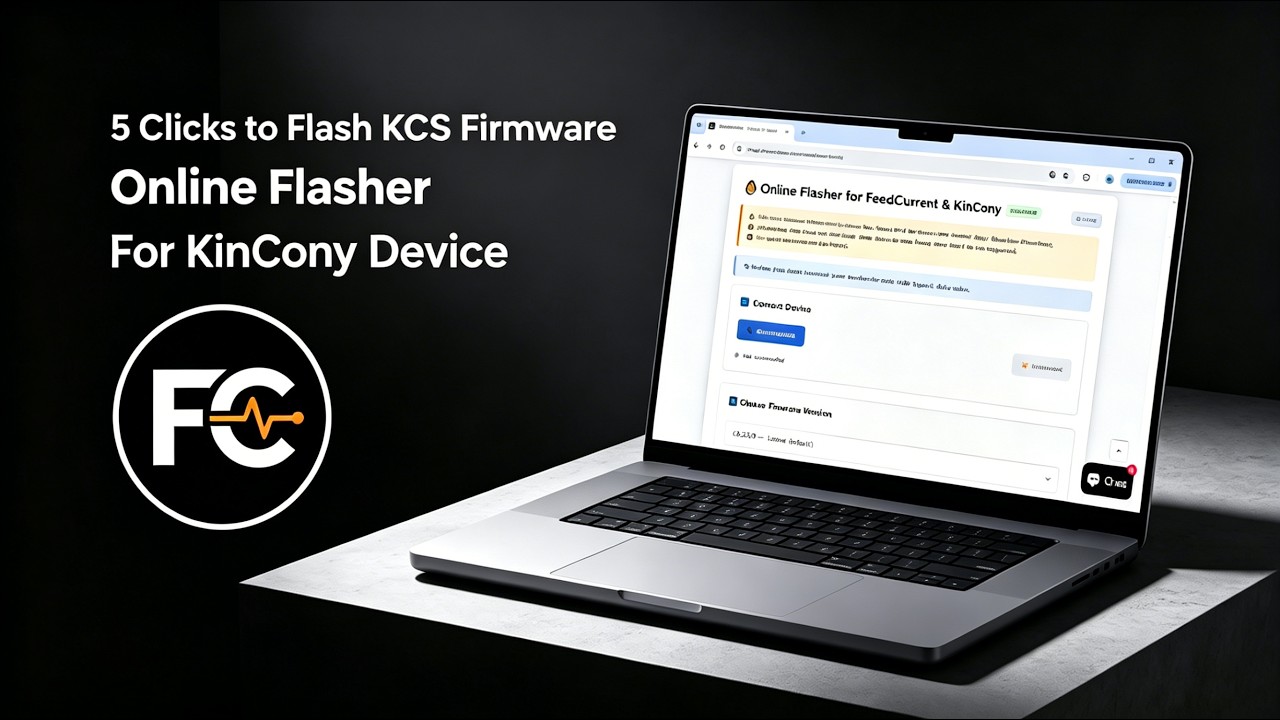
We recommend using the Online Flasher — no driver installation required, works entirely in your browser. Alternatively, follow the Quick Start Guide for manual flashing with the ESP32 desktop tool.
Step 2: Connect & Configure
Power on the board, connect via Ethernet or Wi-Fi, and access the web configuration interface. For detailed configuration, see the KCS Firmware User Guide.
Step 3: Integrate
Enable MQTT auto-discovery in Home Assistant, or pair with Tuya App for voice control.
IV. Video Tutorial: How to Flash KCS Online
No Drivers Needed, No Complex Setup—Flash Directly within Your Browser in 1 Minute!
Looking for software solutions for other products?
View All Product Software Solutions →